
A director owns something nobody else has, which is his own footage. This site is made of it, from the first picture on the home page to the cover of every film.
Overview
Toni Matei directs commercial and industrial films for companies such as Honeywell, Damen, Zoppas Industries and DMT Marine Equipment. His new site has a single job: show the films, then get a client to a message in a few steps.
We built all of it, from the theme to the screen where he adds a new film himself. It is live at tonimatei.ro.
The clip at the top of this page was shot on the live site, one frame at a time. Everything that moves in it is the site's own motion.
The site at launch
- 0
- Third-party plugins
- 16
- Films, each with its own page
- 20
- Old URLs kept or redirected
- 1
- Colour: the copper of his signature
The challenge
The old site ran on a page builder and seven plugins. It looked good on the day it launched and wore down with every change after that. By the end, the film covers were stock pictures.
It needed a complete rebuild, in English, that lost nothing Google already knew about.
01 · The portfolio
The approach
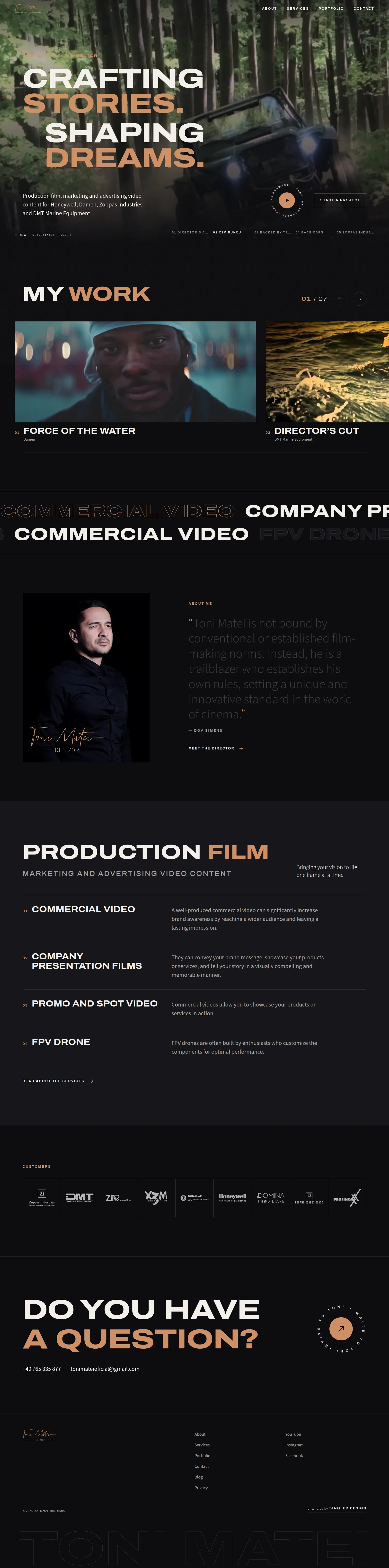
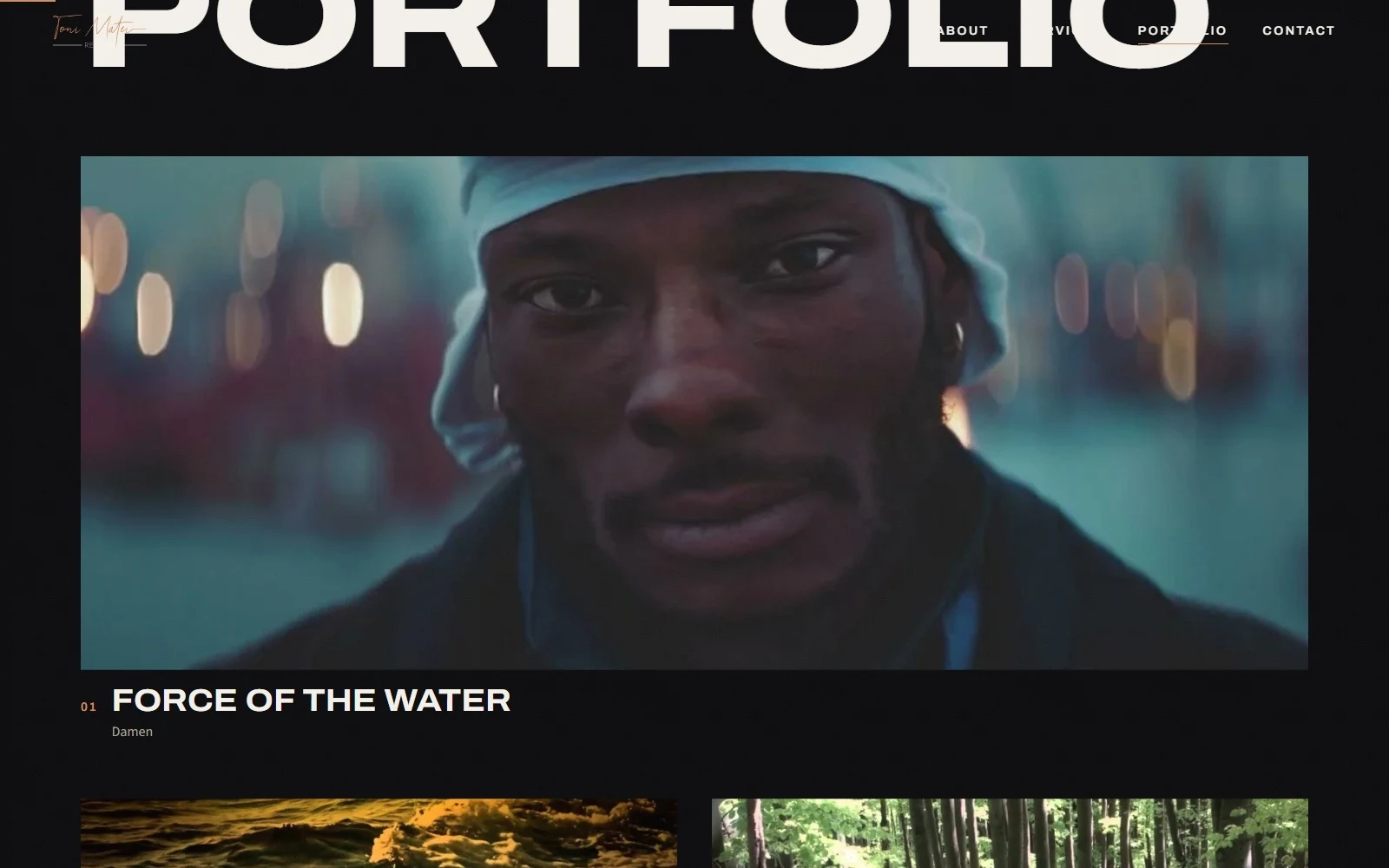
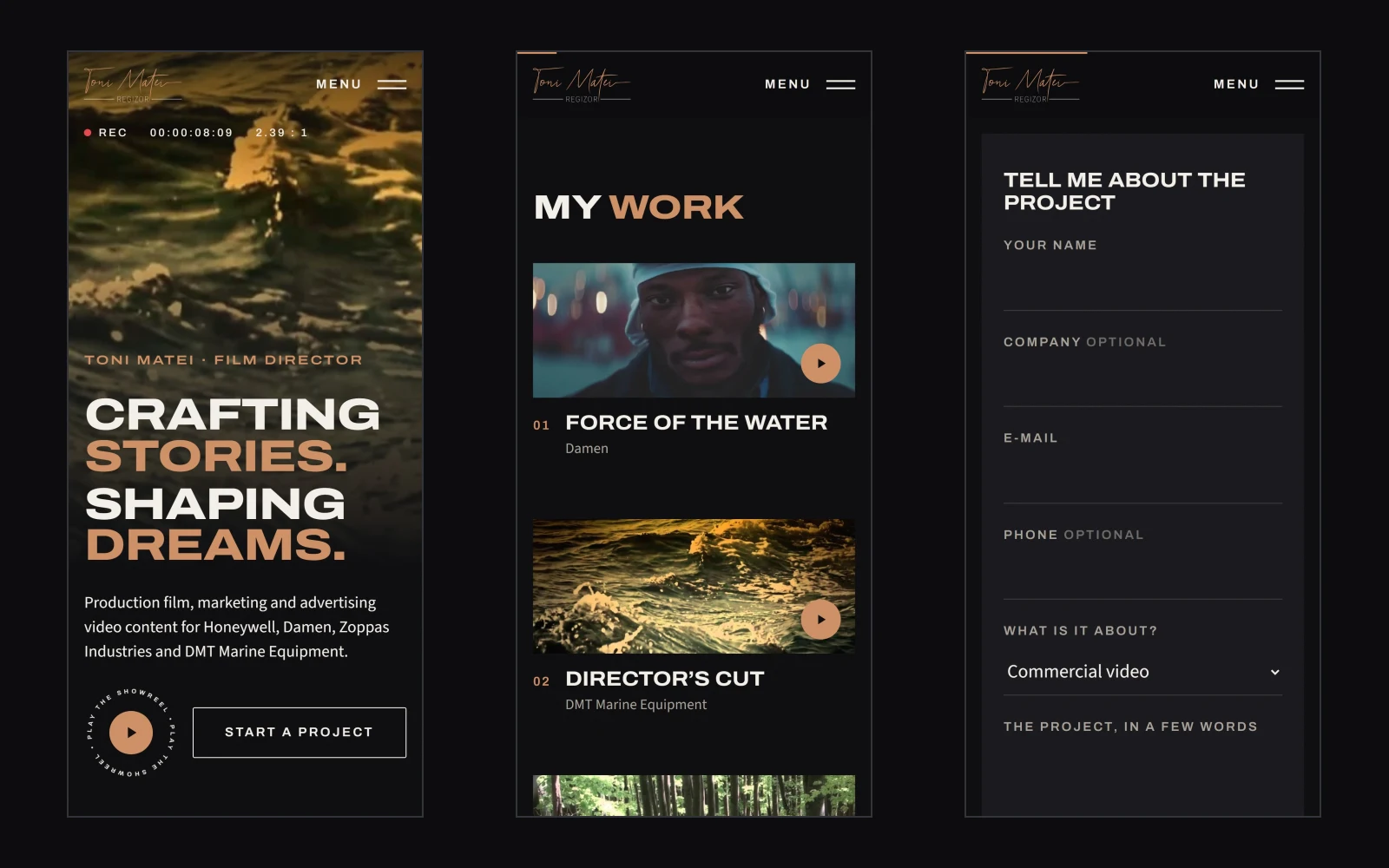
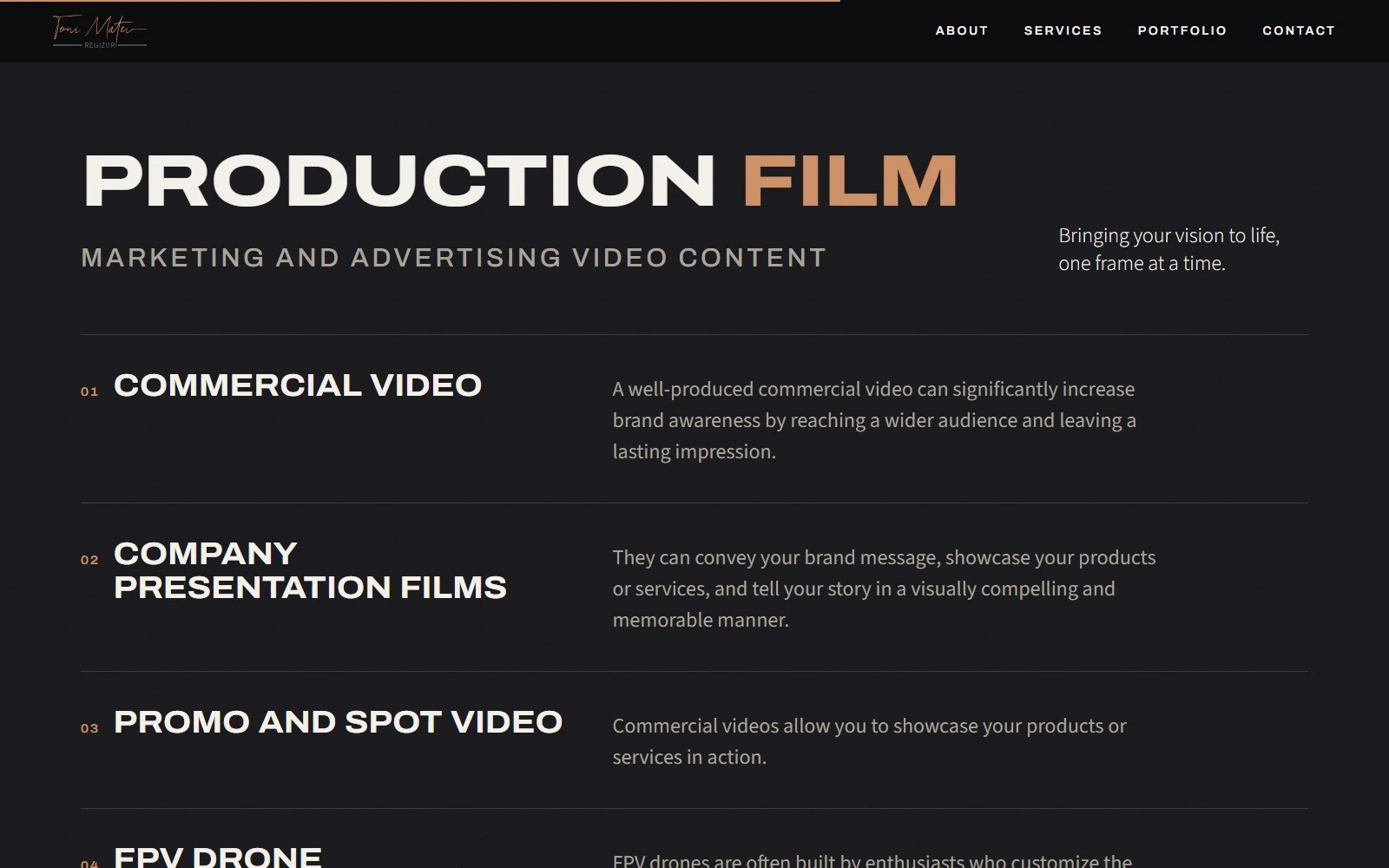
We started from his frames. The page is a screening room. It is black, the copper of his signature is the only colour, and every picture is in the 2.39:1 cinema format. Titles are wide and heavy, the way they are on a film poster.
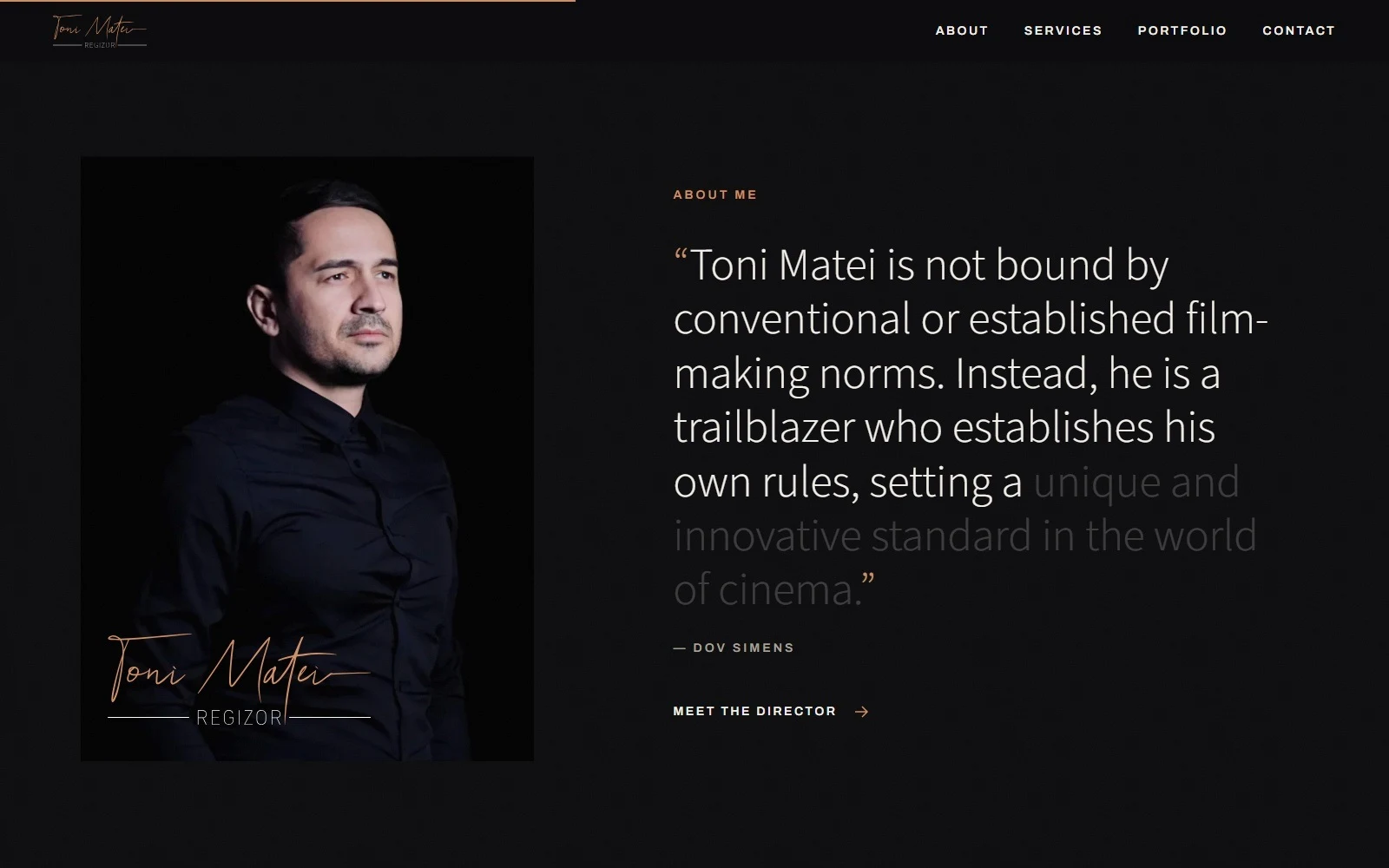
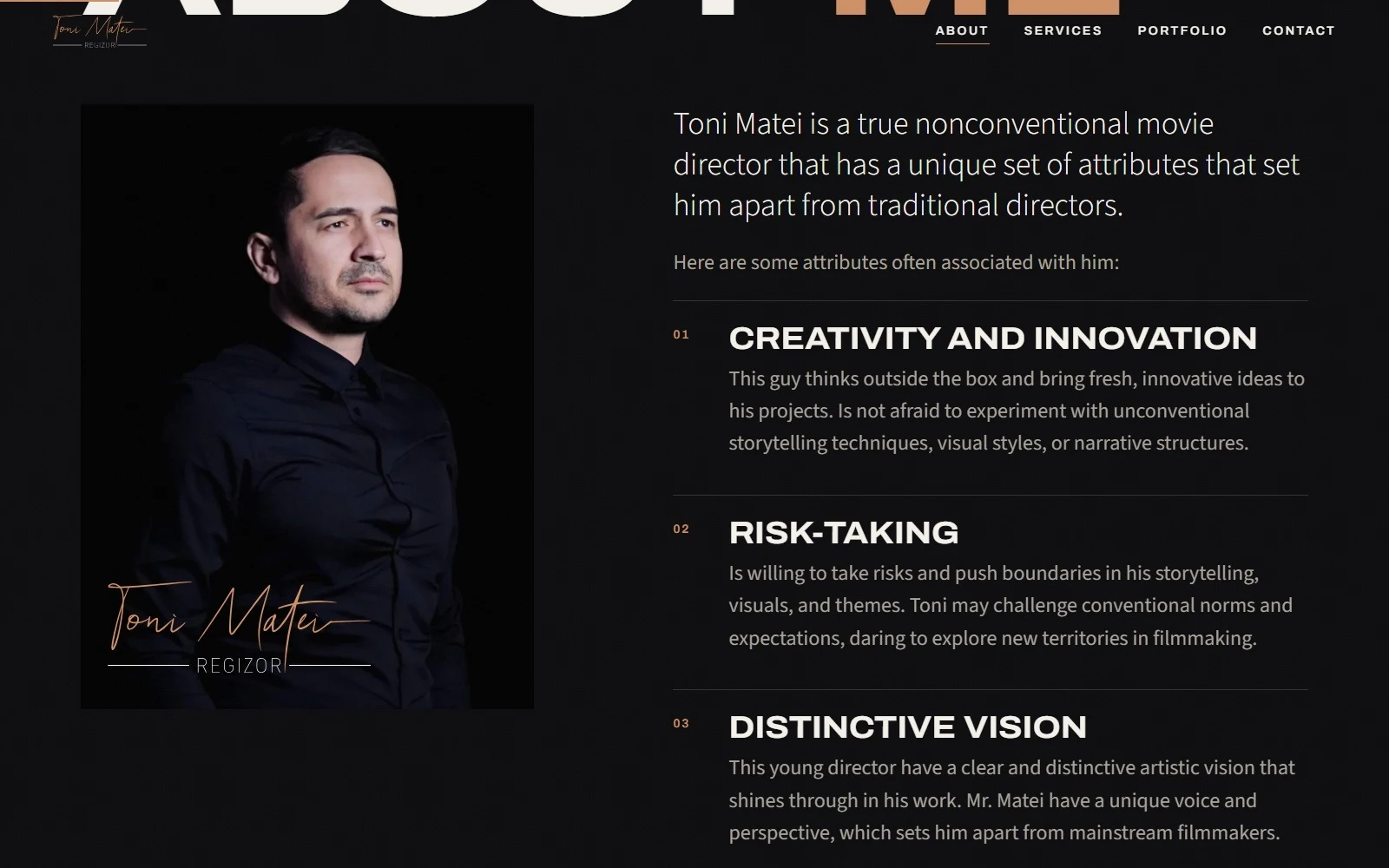
The motion is borrowed from film as well. Cinema bars part when the page loads, an editing timecode runs in the corner, and his signature writes itself across his portrait. Visitors who have asked for reduced motion get the page without any of it.
02 · The portrait
03 · On a phone
The solution
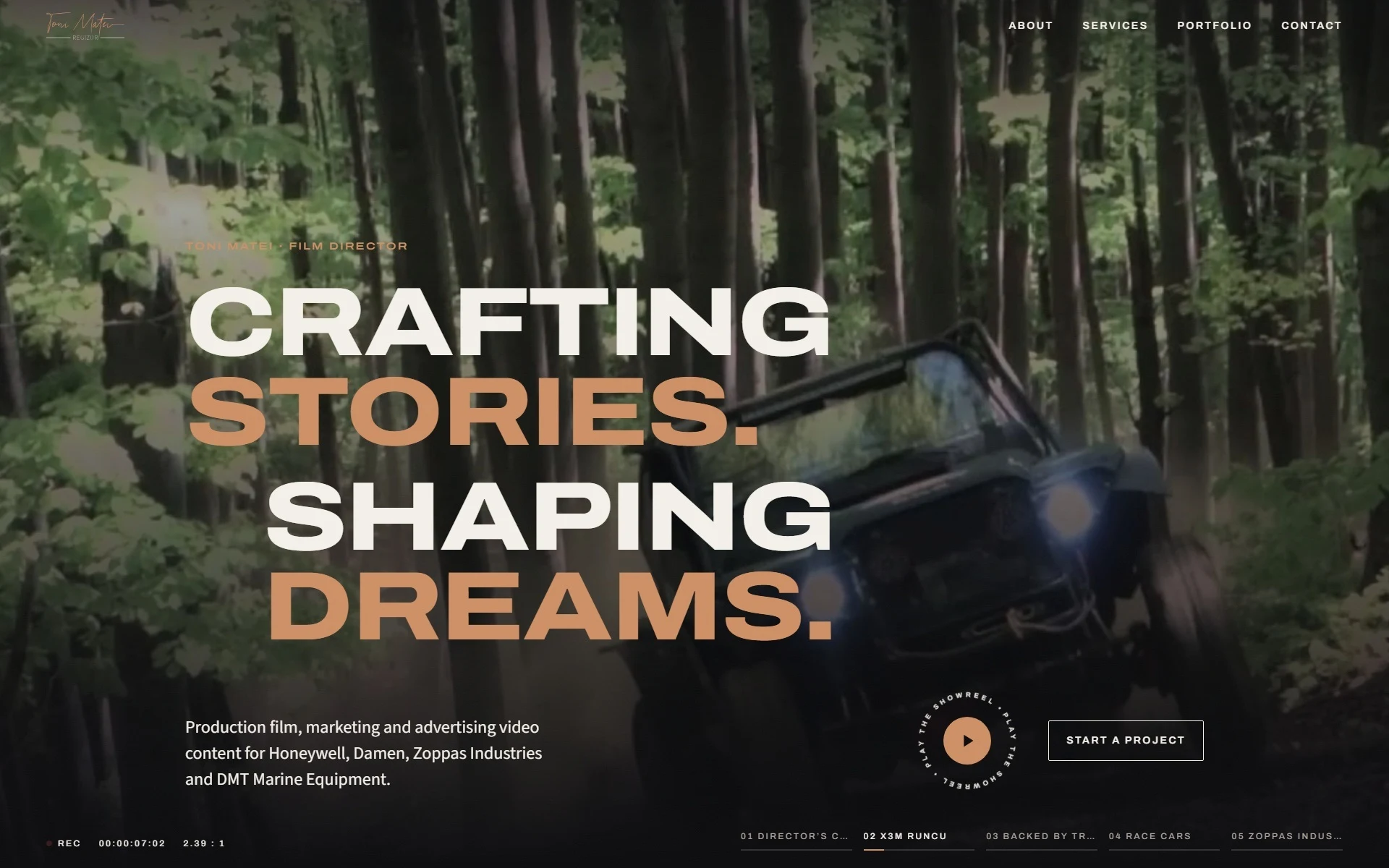
- Home page: frames from five films follow one another behind the title, with cue marks that show how long each has left. A turning ring plays the showreel.
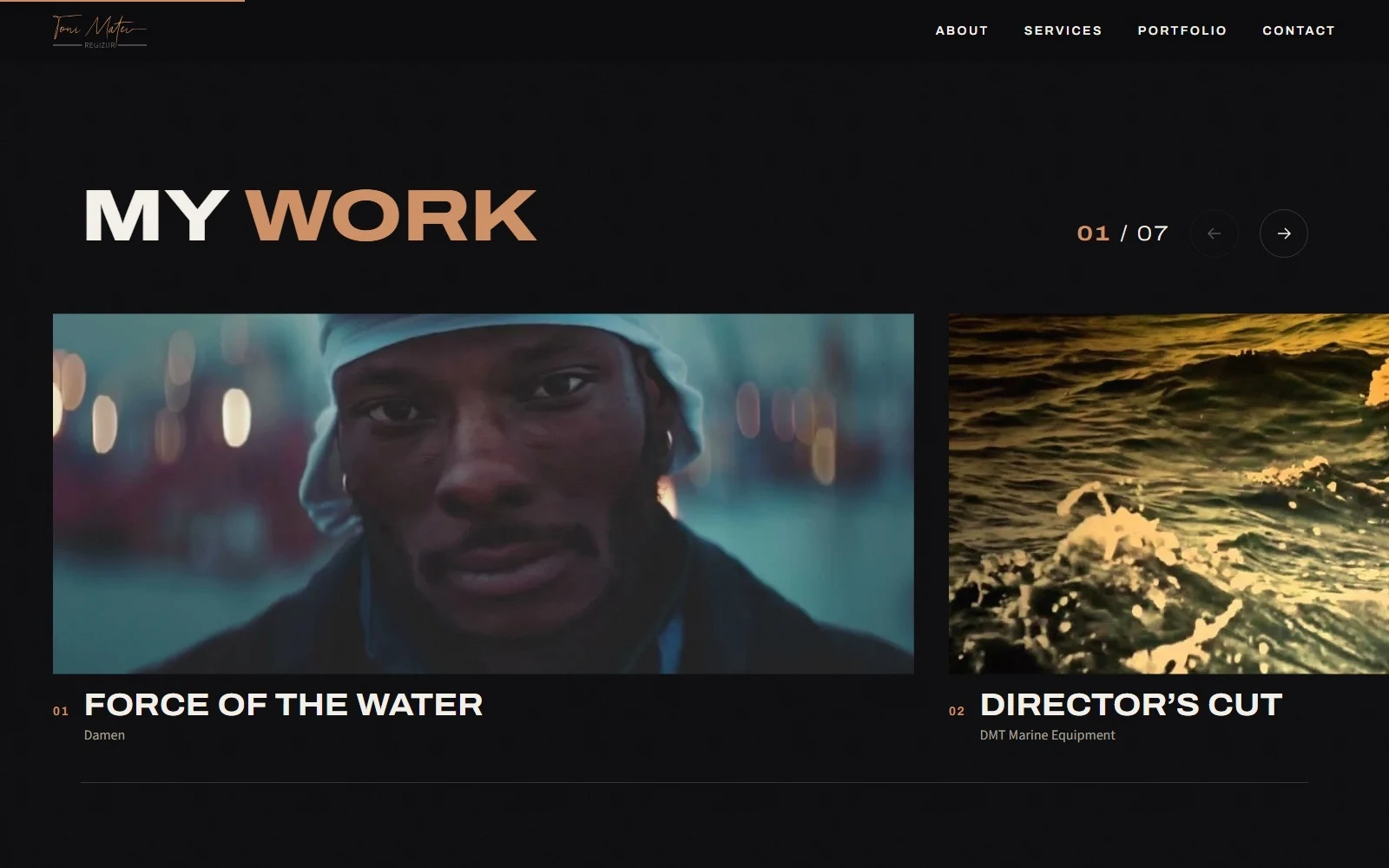
- The films: on wide screens, a strip that moves sideways by arrow, mouse or finger, without holding the page still. On a phone it is a plain column.
- A page for each film: the film is the main content. Video structured data lets Google show it in search results.
- Playback: YouTube loads only when a visitor presses play or opens a film's page. Until then the site loads nothing from anyone else.
- His own screen: "New film" asks for a title, a YouTube link, a client and a date. The cover is taken from the film, with the cinema bars removed, and the page and its data for Google are generated for him.
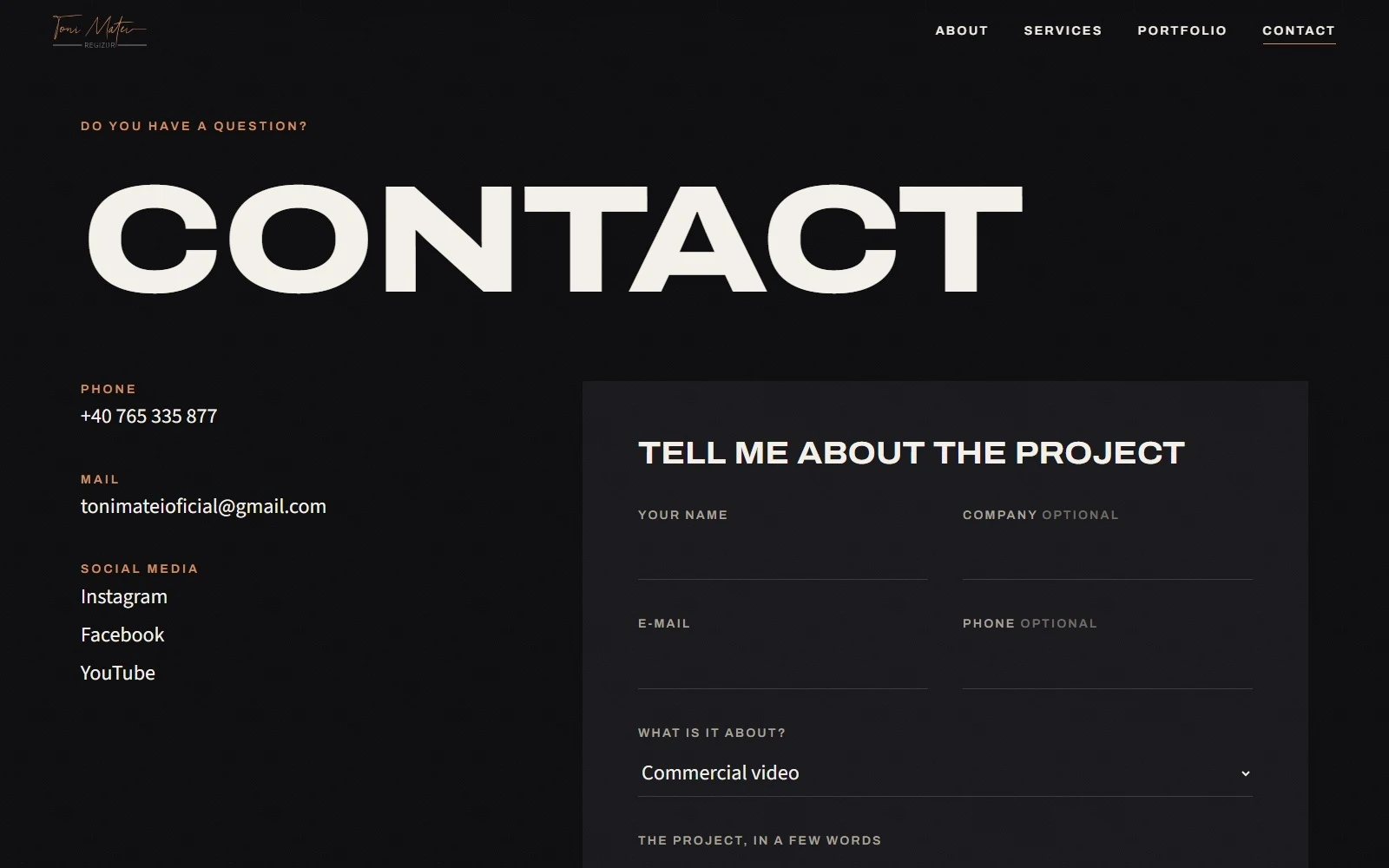
- Enquiries: a short form with no visible captcha. Every message is emailed to him and kept in the site's dashboard too.
- Search and AI assistants: a title and description on every page, structured data, a sitemap and an
llms.txtfile. - No cookies: so there is no consent banner.
04 · Services
05 · Contact
Key moments
His frames instead of stock pictures
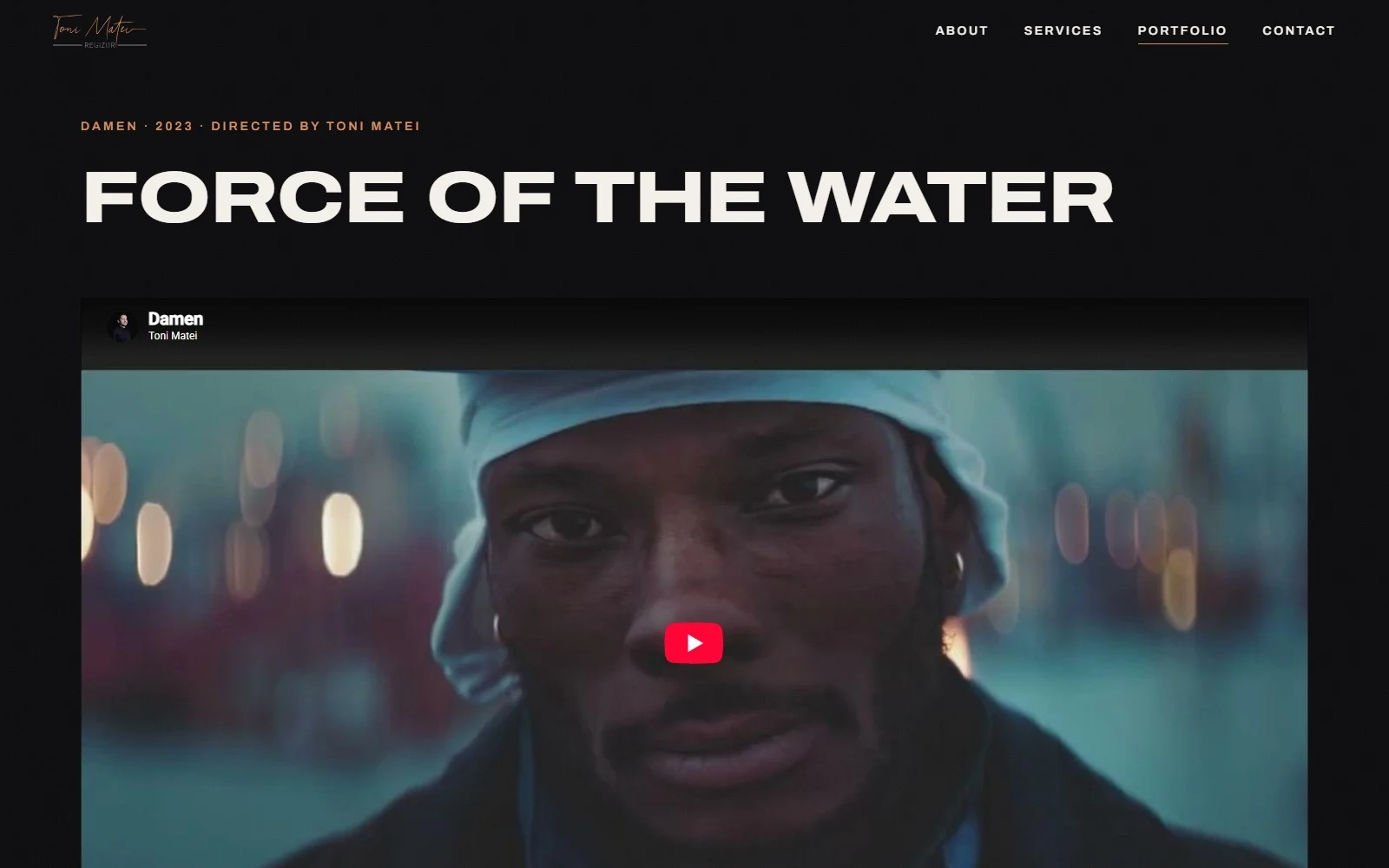
Each film is represented by a frame taken from it. There is no longer a single picture on the site that is not his.
06 · A film
Spectacle that does not hold the visitor in place
The first version of the film strip pinned the page while the films went past. It looked good and it was annoying. We kept the sideways motion and gave the scroll back to the visitor.
07 · The film strip
No address lost
The old site kept its English pages at Romanian addresses. Those addresses are exactly where they were. Author, category and date archives now lead, through a single redirect, to a page that exists.
08 · About
Technology
Platform           WordPress, with a block theme we wrote
Custom functions   a plugin of our own
Motion             GSAP, scroll-linked, off for reduced motion
Images             WebP, in 2.39:1 cinema format
Video              YouTube, loaded only on request
Search             VideoObject and Person data, sitemap, llms.txt
Plugins            none from third parties
The result
The site went live in November 2026. The director adds his own films, and enquiries reach him by email and in a dashboard of his own.